Accommodation
- Hotels or guesthouses in Kathmandu, Nyalam, Saga, and Paryang as per itinerary.
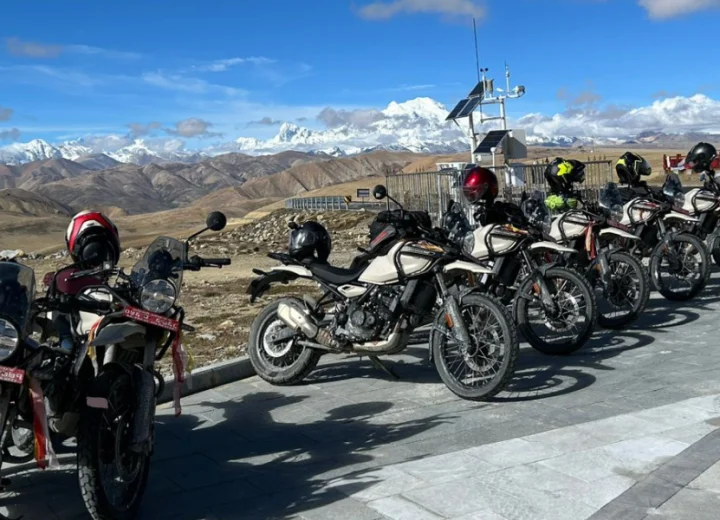
- Basic guesthouse or tent accommodation in high-altitude regions near Mount Kailash and Lake Manasarovar.
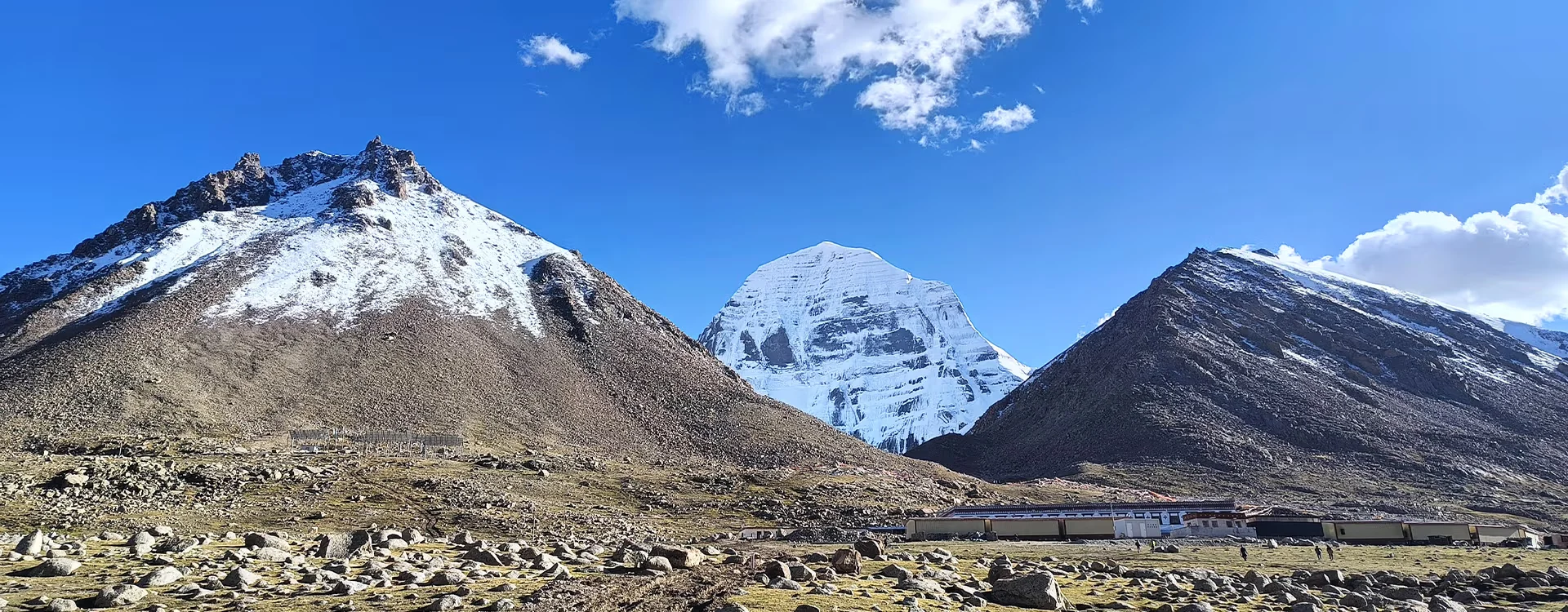
The Kerung route is one of the most popular and accessible ways to undertake the sacred pilgrimage to Mount Kailash (6,638 m) and Lake Manasarovar (4,590 m). This overland journey begins in Kathmandu and travels north through the Nepal–Tibet border at Kerung.
Pilgrims drive across the vast Tibetan Plateau, passing through towns such as Saga and Paryang before reaching the holy Lake Manasarovar and the sacred Mount Kailash.
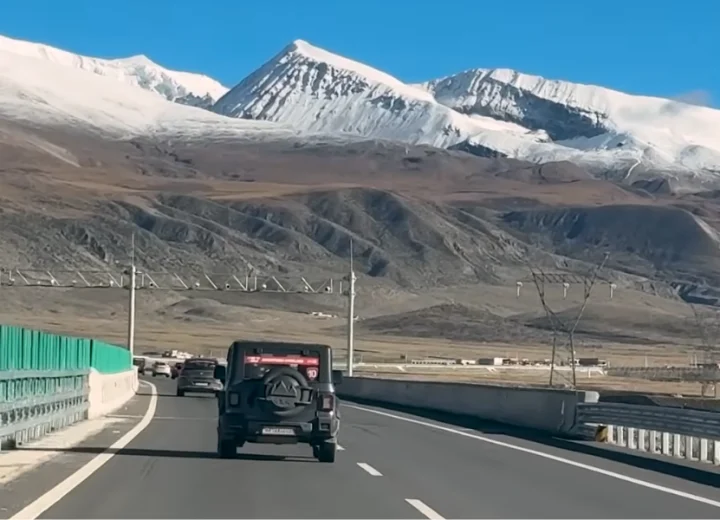
Compared to other routes, the Kerung route allows for gradual altitude acclimatization and comfortable overland travel, making it suitable for a wide range of pilgrims. The journey combines spiritual devotion with breathtaking landscapes, including snow-capped mountains, high-altitude lakes, and the expansive Tibetan plains.
Temperatures are typical for the best travel months (June–August) and can change with the weather.
Upon arrival at Tribhuvan International Airport, you will be transferred to your hotel in Kathmandu, located at an altitude of 1,350 meters. The airport is approximately 6 km from the hotel and the transfer takes around 20–25 minutes. In the evening, if time permits, you may attend the sacred Aarati ceremony at Pashupatinath Temple. A detailed tour briefing will be conducted at the hotel.
This day is dedicated to Chinese Group Visa processing and spiritual preparation. You will participate in a special Panchamrit Puja and Rudrabhishek ceremony. The day involves short city drives within Kathmandu, typically 30–40 minutes between sites. Overnight at 1,350 meters.
A relaxed day for additional temple visits and final preparation for the journey. No altitude change. This day ensures proper rest before beginning the overland Himalayan drive.
After receiving the Tibet visa, the remainder of the day is allocated for packing, duffel distribution, and final health guidance. Overnight at 1,350 meters.
You begin your overland journey with a scenic mountain drive of 122 km to Syabrubesi. The journey takes approximately 8–9 hours, following river valleys and terraced hills. The altitude increases gradually from 1,350 meters to 1,500 meters, allowing gentle acclimatization.
After a short morning drive of about 2 hours to Rasuwagadhi border, you complete immigration formalities and enter Tibet. From the border, a 35 km drive of approximately 4–5 hours takes you to Kerung (2,900 m). The altitude gain is significant, so rest and hydration are essential.
Today’s journey covers approximately 270 km across the Tibetan plateau and takes 5–6 hours. The road climbs steadily from 2,900 meters to 4,640 meters at Saga. You will cross several high passes offering magnificent Himalayan views. The substantial altitude gain makes this a key acclimatization day.
A 230 km drive of around 6–7 hours brings you to Paryang at 4,550 meters. The terrain is vast and open, with sweeping views of the Tibetan plateau. The altitude remains relatively stable, helping your body adjust.
Driving approximately 260 km for 5–6 hours, you reach the sacred Lake Manasarovar at 4,590 meters. During the journey, you will have your first majestic darshan of Mount Kailash. Evening time is reserved for meditation and gentle walks along the lakeshore.
After a morning holy bath and puja ceremony at 4,590 meters, a short 40 km drive of 1–2 hours takes you to Darchen (4,664 m), the base camp for the Kailash Parikrama. The minimal altitude gain allows preparation for the trek ahead.
A 45 km drive of about 30–40 minutes takes you to Yam Dwar (4,740 m), the traditional starting point of the Kora. From there, you begin a 12 km trek to Dirapuk, which takes approximately 5–6 hours. The trail ascends gradually to 4,909 meters, offering close views of the North Face of Mount Kailash.
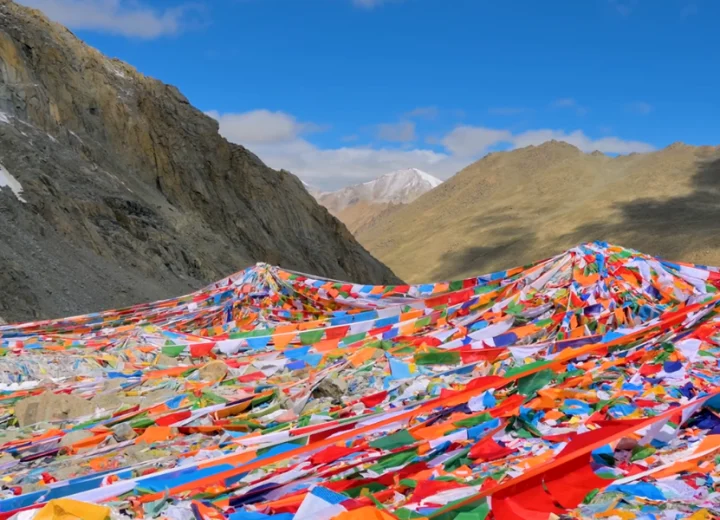
This is the most demanding day of the pilgrimage. The 22 km trek takes approximately 9–10 hours. You ascend steeply to Dolma La Pass at 5,630 meters — the highest point of the journey — before descending to Zuthulpuk at 4,820 meters. Due to high altitude and long walking hours, slow pacing is essential.
A gentle 7 km trek of around 3 hours completes the Parikrama at Chongdo (4,660 m). From here, a long return drive of 7–8 hours brings you back to Saga at 4,640 meters.
Today you descend significantly from 4,640 meters to 2,900 meters over a 190 km drive lasting 6–7 hours. The lower altitude usually brings noticeable physical relief.
After completing immigration formalities at the border, you continue with an 8-hour drive covering 180 km back to Kathmandu at 1,350 meters. This marks the conclusion of the overland pilgrimage.
Transfer to the airport (20–25 minutes). Your sacred Kailash Mansarovar Yatra concludes.
The best time for the Kailash Mansarovar Yatra – Kerung Route is June–August, with May and September also good. Typical daytime temperatures at Darchen (4,600 m) in those months are around 14 °C, with colder nights at higher camps.
Kailash Mansarovar Yatra departures run from May to September, when the Dolma La (5,630 m) is passable. The full moon of Saga Dawa (May/June) is the most auspicious time for the kora.
| Month | Conditions | Day | Night |
|---|---|---|---|
| January | Not recommended — severe cold, passes and lodges may close | -5 °C | -20 °C |
| February | Not recommended — severe cold, passes and lodges may close | -3 °C | -18 °C |
| March | Not recommended — severe cold, passes and lodges may close | 1 °C | -13 °C |
| April | Not recommended — seasonal closures | 5 °C | -8 °C |
| May | Good — mostly fine weather, fewer crowds | 10 °C | -3 °C |
| June | Best time — stable weather and clear views | 14 °C | 2 °C |
| July | Best time — stable weather and clear views | 15 °C | 4 °C |
| August | Best time — stable weather and clear views | 14 °C | 3 °C |
| September | Good — green landscapes, some rain | 11 °C | -1 °C |
| October | Not recommended — seasonal closures | 5 °C | -8 °C |
| November | Not recommended — severe cold, passes and lodges may close | -1 °C | -14 °C |
| December | Not recommended — severe cold, passes and lodges may close | -4 °C | -18 °C |
Average day and night temperatures at Darchen (4,600 m). Higher camps are colder.
Your packing checklist for Kailash Mansarovar Yatra – Kerung Route. Tick items off as you pack — down jackets and sleeping bags can also be rented in Kathmandu.
Private departures run on any date. Pick the start date that suits you and we will build the trip around it — same price, your own guide and team.
The Kailash Mansarovar Yatra – Kerung Route is graded Moderate — suitable for most active travellers. Expect 5–7 hours of walking on most days on mountain trails with plenty of ascents and descents. Regular cardio training — hiking, running, cycling or stair climbing — for 6–8 weeks before departure makes the trip far more enjoyable.
For the Mount Kailash & western Tibet region the best months are June–August. Kailash Mansarovar Yatra departures run from May to September, when the Dolma La (5,630 m) is passable. The full moon of Saga Dawa (May/June) is the most auspicious time for the kora.
You need your Chinese group visa, Tibet Travel Permit, Alien’s Travel Permit and the Kailash–Mansarovar area permits. Nord Extreme arranges every permit for you before the trip starts — check the "Includes" section above for exactly what is covered in the price. Just bring your passport and a few passport-size photos.
Guesthouses and hotels in Nepal and Lhasa or Kerung, then basic guesthouses around Mansarovar and on the Kailash kora, where facilities are simple at high altitude. We provide sleeping bags and support staff throughout.
Both. You can join one of the fixed departures listed under "Dates & Prices", or book a private trip for just you, your family or friends on any date. Solo travellers are welcome — you will always have your own licensed guide.
Yes, travel insurance is compulsory. It must cover medical treatment and emergency helicopter evacuation up to the trip’s highest altitude, plus trip cancellation. Please send us your policy details before departure.
See the "What to bring" checklist on this page for the full list. The essentials are broken-in boots, warm layers, a down jacket, a waterproof shell, sun protection and a daypack. Down jackets and sleeping bags can be rented cheaply in Kathmandu, and a porter carries your main bag (up to 10–12 kg).
Keep exploring

Namaste! 🙏
Welcome to Nord Extreme Himalaya. Questions about Kailash Mansarovar Yatra – Kerung Route? Send us a message — a Sherpa trip expert in Kathmandu will reply on WhatsApp.
Mr. Sonam G. SherpaOpens WhatsApp · +9779851078748