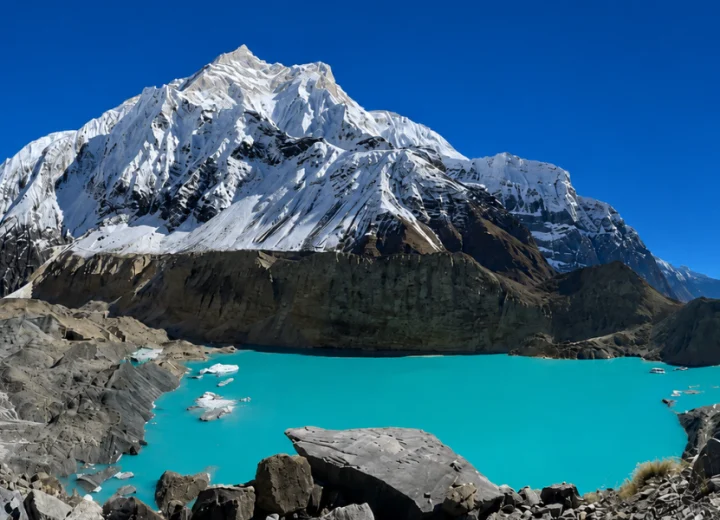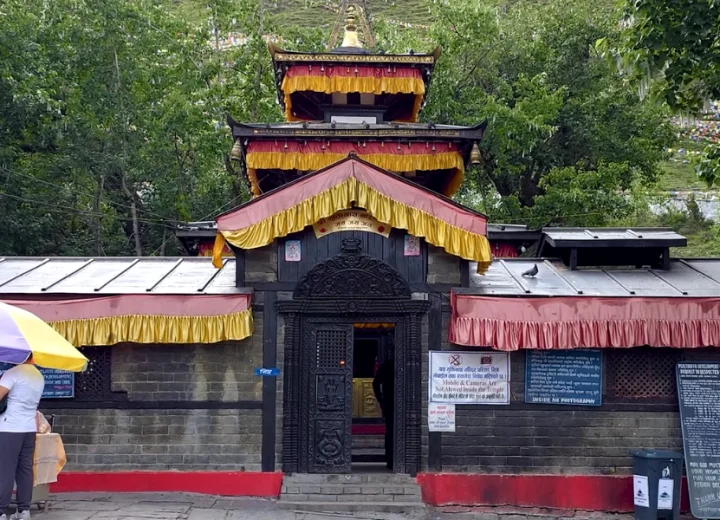
Transportations
- Private/tourist vehicles for airport pickup and drop-off in Kathmandu.
- Private/tourist vehicles transfer as per itinerary to access the trailheads.
- Domestic flight included for access to the trekking starting & ending point.
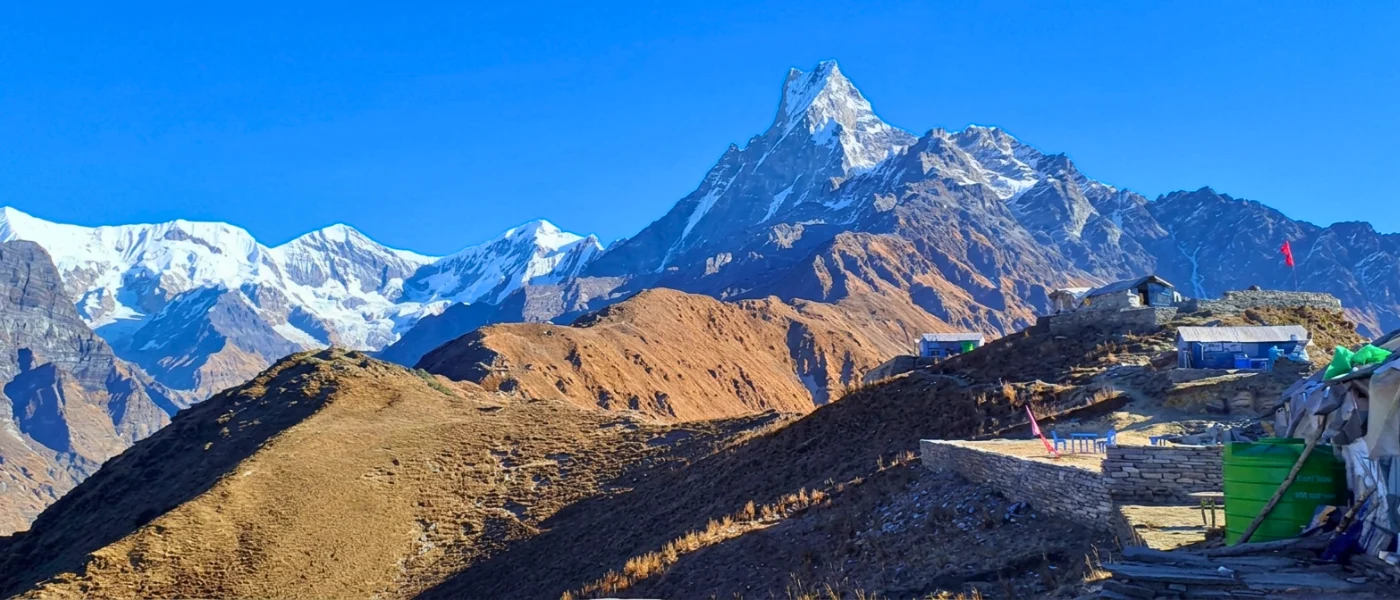
The Mardi Himal Trek is a short yet spectacular Himalayan trekking route in the Annapurna region, offering pristine mountain views, peaceful trails, and an off-the-beaten-path experience. Known for its quiet environment and close-up views of the Annapurna range, this trek has quickly become one of Nepal’s most popular moderate adventures.
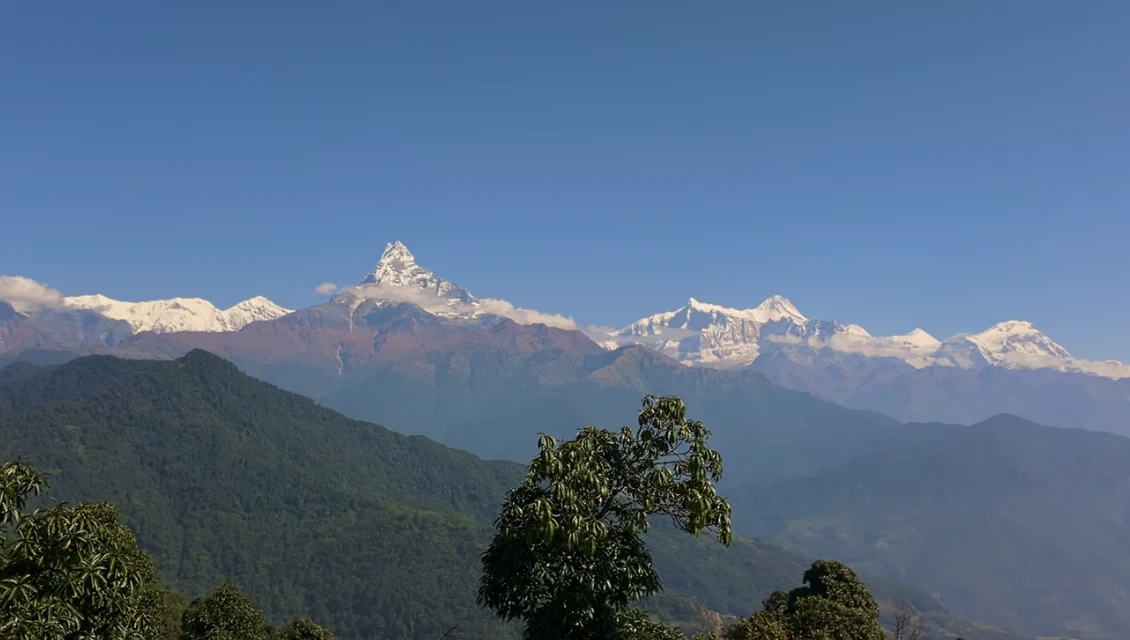
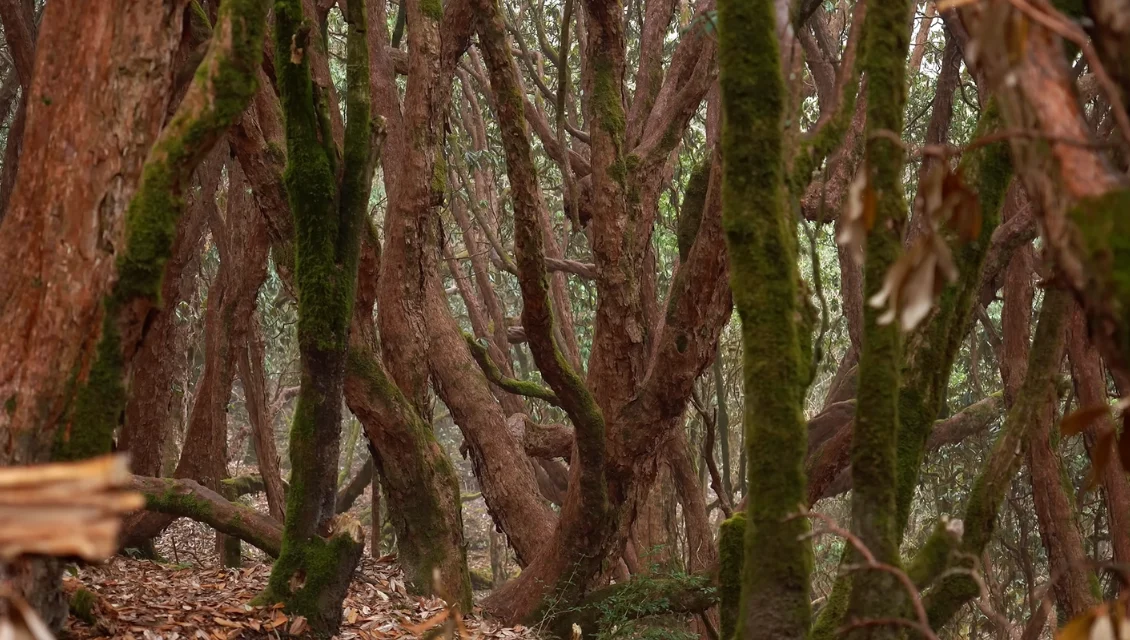
The journey leads trekkers through dense rhododendron forests, traditional villages, and high alpine ridges before reaching the Mardi Himal Base Camp. Along the route, trekkers are rewarded with stunning views of Himalayan giants including Annapurna South, Machhapuchhre, Hiunchuli, and the broader Annapurna range. This trek is ideal for beginners and intermediate trekkers seeking a short but rewarding Himalayan experience.
The Mardi Himal Trek is located in the Annapurna region within Annapurna Conservation Area. The route typically begins near Pokhara and ascends through forested trails, ridge lines, and alpine terrain toward Mardi Himal Base Camp.
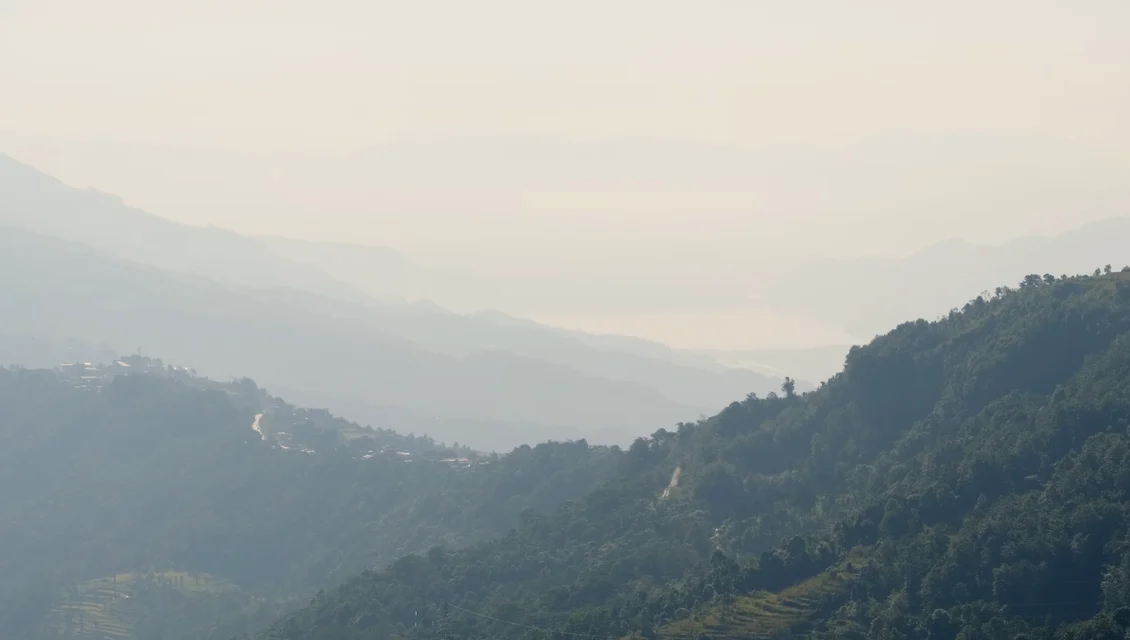
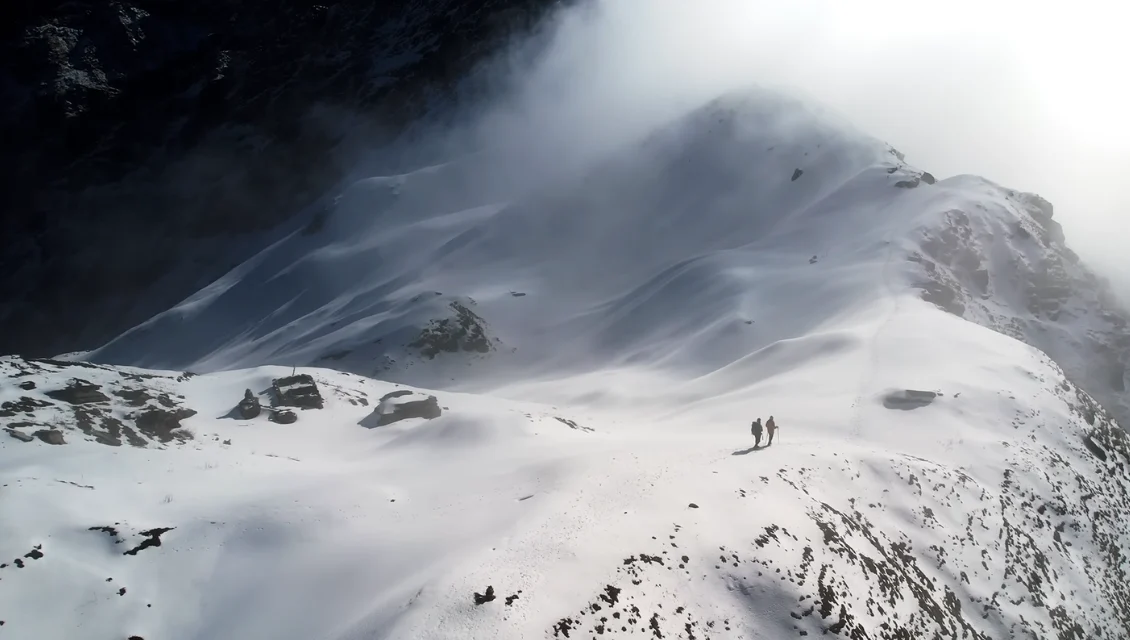
The landscape changes dramatically along the way. Lower sections feature lush rhododendron and oak forests rich in wildlife, while higher sections open into narrow ridges with sweeping panoramic views of snow-covered peaks. The ridge walk from High Camp to Base Camp is one of the trek’s highlights, offering continuous views of the Annapurna massif on one side and deep valleys on the other.
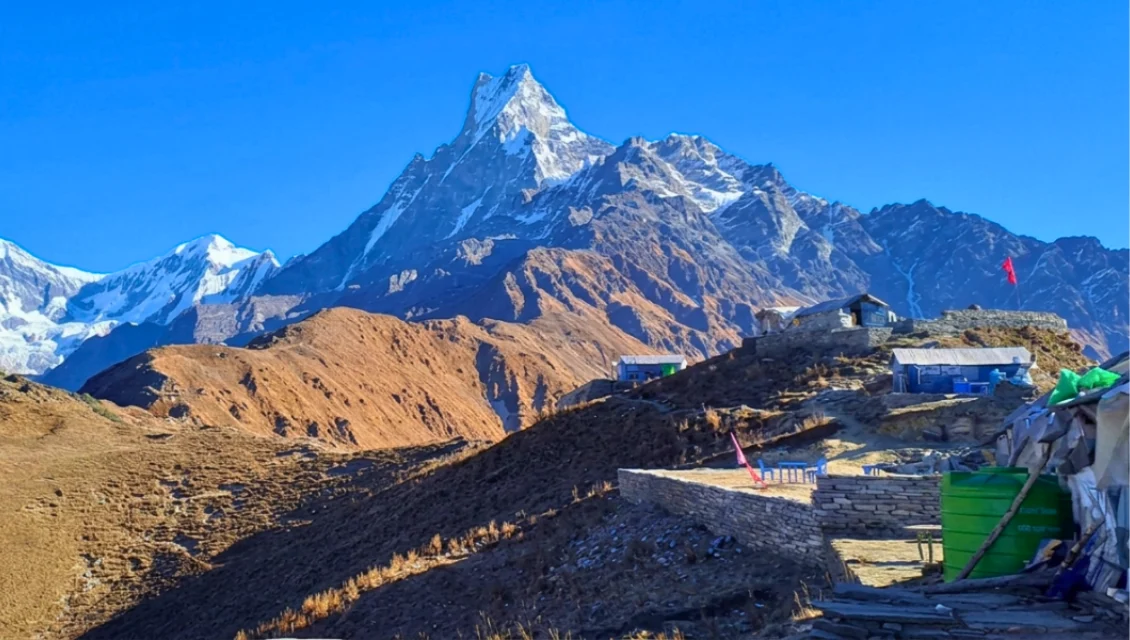
The base camp area sits beneath the towering south face of Machhapuchhre (Fishtail), providing one of the closest and most dramatic mountain viewpoints in the Annapurna region.
The best seasons for the Mardi Himal Trek are spring (March–May) and autumn (September–November). These periods offer stable weather, clear skies, and excellent mountain visibility.
Spring is especially beautiful due to blooming rhododendron forests that color the trails in red, pink, and white. Autumn provides crystal-clear views and ideal trekking conditions after the monsoon season. Winter (December–February) is colder but offers quiet trails and clear mountain scenery for well-prepared trekkers. The monsoon season (June–August) is less favorable due to rain, fog, and slippery trails.
Overall, autumn is the most recommended season for the best trekking experience.
The Mardi Himal region is inhabited by Gurung and Magar communities, known for their rich traditions, hospitality, and deep connection to the Himalayas. The trail passes through small villages where traditional lifestyles, farming practices, and cultural customs remain well preserved.
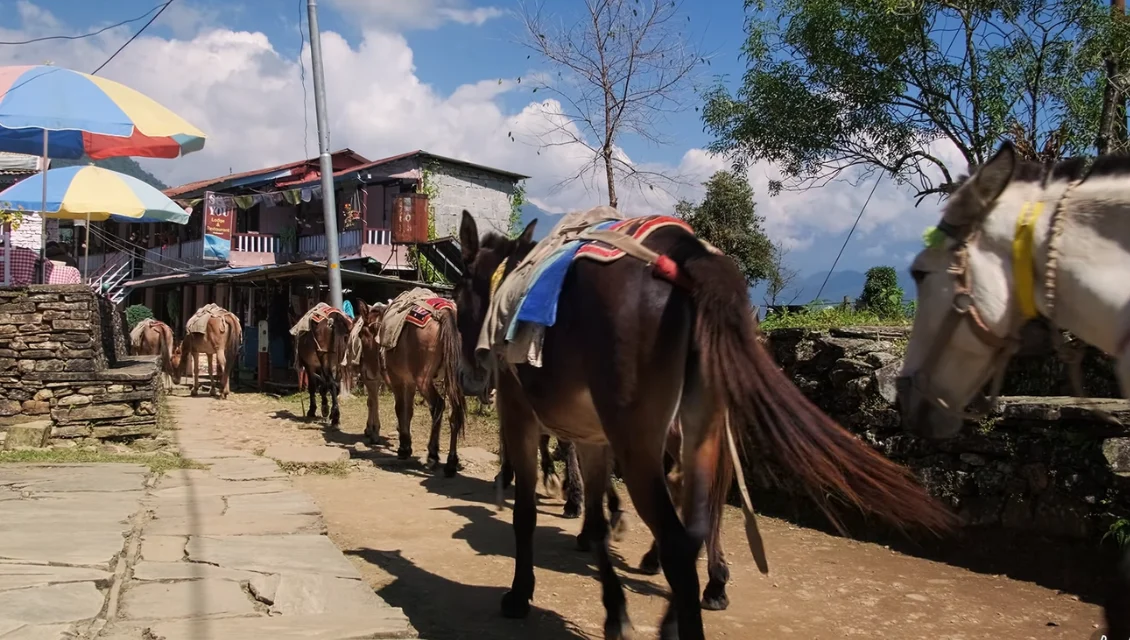
Trekkers experience authentic village life, including stone-built houses, terraced fields, prayer flags, and small local teahouses that reflect the simplicity of Himalayan living. While the trek is less culturally dense than longer routes, it still offers meaningful interactions with local communities along the lower sections.
The combination of peaceful trails, stunning mountain views, and warm local hospitality makes the Mardi Himal Trek a perfect short Himalayan adventure.
Temperatures are typical for the best travel months (March–April and October–November) and can change with the weather.
Upon arrival at Tribhuvan International Airport, you will be warmly welcomed by our Nord Extreme representative and transferred to your hotel in Kathmandu. After check-in and some rest, our team will conduct a detailed trek briefing covering the Mardi Himal route, safety guidelines, altitude awareness, and daily expectations.
We will also begin processing your trekking permits (TIMS and Annapurna Conservation Area Permit), check your trekking gear, and assist you with any missing equipment if needed. The rest of the day is free for relaxation or exploring the vibrant streets of Thamel.
Today will be dedicated to trek preparation and completing all necessary permit procedures in Kathmandu. Our team from Nord Extreme will assist you with permit arrangements, trekking briefing, gear checking, and final trip preparation to ensure a safe and comfortable journey ahead.
You will also have free time to explore Thamel for any last-minute shopping or personal preparations before the trek begins.
Today we travel to Pokhara, one of Nepal’s most beautiful lakeside cities. You can either take a short scenic flight over the Himalayas or enjoy a long but scenic drive through rivers, hills, and countryside settlements.
Upon arrival, you will have time to relax by Phewa Lake, explore cafés, or simply enjoy views of Machhapuchhre reflecting over the water. Pokhara offers a peaceful atmosphere and serves as the gateway to the Annapurna region.
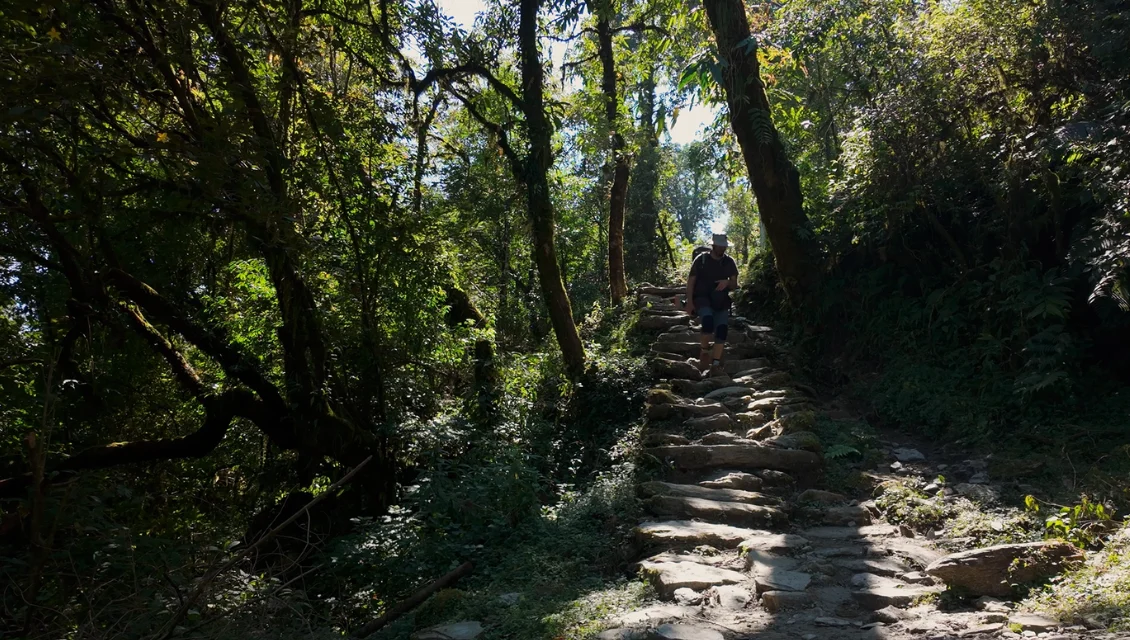
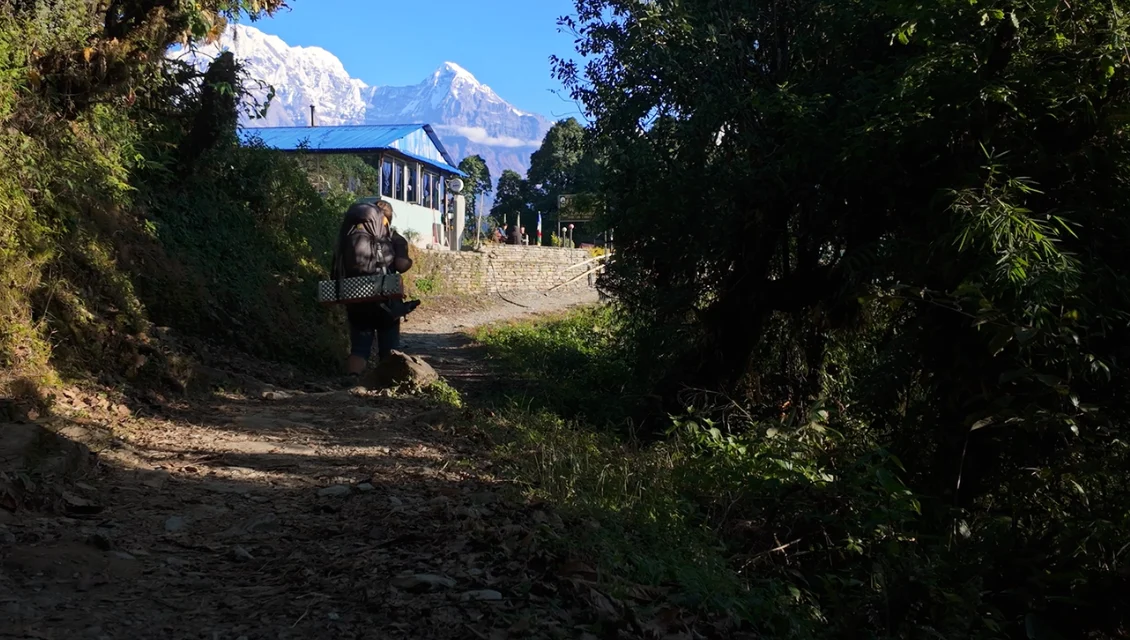
After a short 1.5-hour drive to Kande, the trekking journey officially begins. The trail gradually ascends through dense rhododendron and oak forests, with fresh mountain air and peaceful surroundings.
Along the way, you pass small shepherd shelters and scattered villages that reflect traditional Himalayan lifestyle. Forest Camp is a quiet resting point surrounded by deep woodland, offering your first overnight stay in the mountains.
The trail today becomes more scenic as the forest opens into moss-covered trees and alpine vegetation. Gradual ascent continues with occasional clearings that offer glimpses of Annapurna South and Machhapuchhre.
As you reach Low Camp, the temperature drops slightly and the landscape begins to feel more mountainous. This is your first major transition into the high Himalayan zone, where clouds drift below the ridges on clear days.
Today’s climb is more challenging as the forest slowly disappears and the trail follows open ridgelines. With every step upward, the panoramic views become more dramatic, revealing the full face of Machhapuchhre (Fishtail Mountain).
High Camp offers one of the most spectacular sunset and sunrise views in the entire Annapurna region. The evening is spent preparing for the next day’s early ascent.
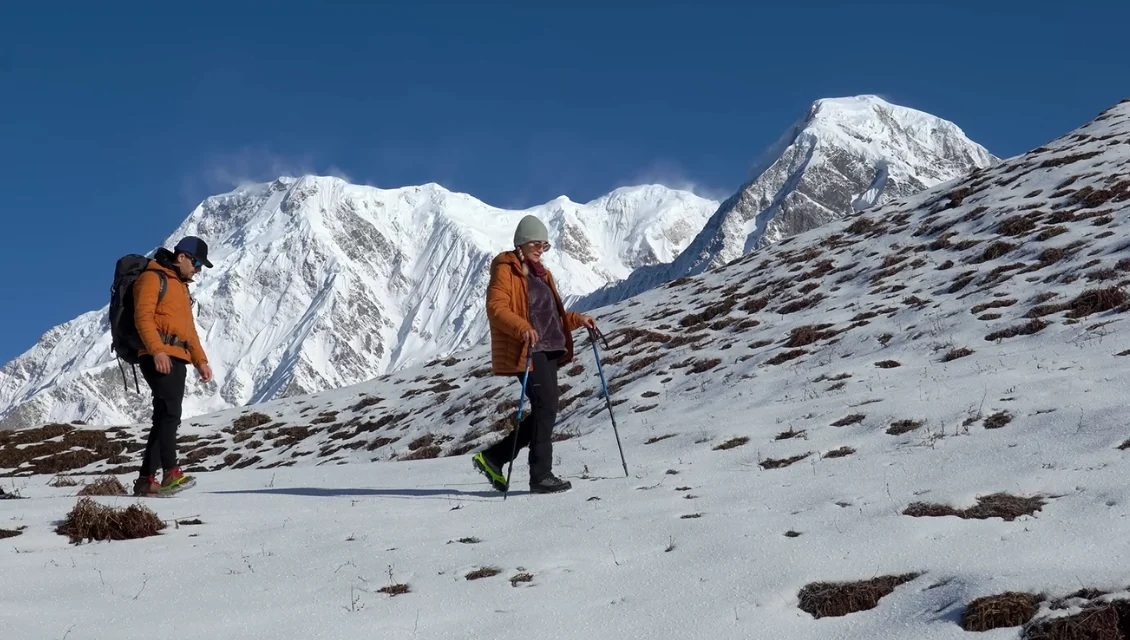
This is the most rewarding and challenging day of the trek. Starting early in the morning, we ascend steep alpine trails toward Mardi Himal Viewpoint or further to Base Camp. The higher you go, the more breathtaking the scenery becomes, with 360-degree views of Annapurna, Hiunchuli, and Machhapuchhre dominating the skyline.
After spending time at the top absorbing the Himalayan panorama, we carefully descend back to Low Camp for overnight rest.
We begin a long descent through lush forests and traditional villages, where you can observe rural Nepali lifestyle, terraced fields, and friendly locals along the way. The trail gradually leads to Siding Village, marking the end of the trekking route.
From here, a vehicle takes you back to Pokhara, where you can finally relax in comfort and celebrate the successful completion of your trek.
After breakfast, we return to Kathmandu by scenic flight or overland drive. The rest of the day is free for leisure activities such as shopping in Thamel, visiting cultural landmarks, or enjoying local cuisine.
This is a relaxed transition day after your Himalayan journey.
Depending on your flight schedule, we will transfer you to the airport for your departure. If you wish to extend your stay, optional tours such as heritage sightseeing, yoga retreats, or additional treks can be arranged.
The best time for the Mardi Himal Trek is March–April and October–November, with May, September and December–February also good. Typical daytime temperatures at Ghorepani / Chhomrong (≈2,500–2,900 m) in those months are around 14 °C, with colder nights at higher camps.
October and November offer crystal-clear views of Annapurna and Machhapuchhre; March to May is warm with blooming rhododendron forests. Lower Annapurna treks such as Poon Hill are possible in winter, while Thorong La and high passes may close after heavy snow.
| Month | Conditions | Day | Night |
|---|---|---|---|
| January | Good — clear skies, cold nights and fewer trekkers | 8 °C | -4 °C |
| February | Good — clear skies, cold nights and fewer trekkers | 9 °C | -3 °C |
| March | Best time — stable weather and clear views | 13 °C | 0 °C |
| April | Best time — stable weather and clear views | 16 °C | 4 °C |
| May | Good — mostly fine weather, fewer crowds | 18 °C | 7 °C |
| June | Possible — monsoon showers and cloud | 19 °C | 10 °C |
| July | Not recommended — monsoon rain, cloud and slippery trails | 19 °C | 11 °C |
| August | Possible — monsoon showers and cloud | 19 °C | 11 °C |
| September | Good — green landscapes, some rain | 18 °C | 9 °C |
| October | Best time — stable weather and clear views | 16 °C | 4 °C |
| November | Best time — stable weather and clear views | 12 °C | 0 °C |
| December | Good — clear skies, cold nights and fewer trekkers | 9 °C | -3 °C |
Average day and night temperatures at Ghorepani / Chhomrong (≈2,500–2,900 m). Higher camps are colder.
Your packing checklist for Mardi Himal Trek. Tick items off as you pack — down jackets and sleeping bags can also be rented in Kathmandu.
Private departures run on any date. Pick the start date that suits you and we will build the trip around it — same price, your own guide and team.
Accommodation
Accommodation is provided in local teahouses and mountain lodges along the entire route.
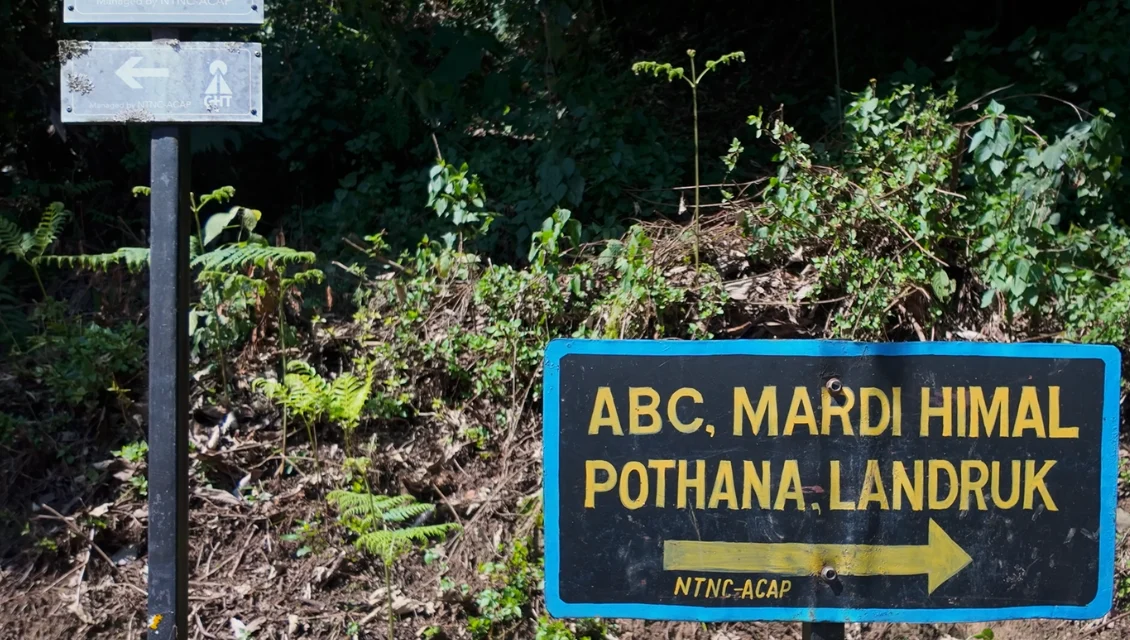
In lower villages such as Kande, Pothana, and Forest Camp, lodges are more comfortable with better facilities. As the trail ascends toward High Camp and Mardi Himal Base Camp, accommodation becomes more basic due to altitude and remoteness.
Rooms are typically twin-sharing with simple bedding and shared bathroom facilities.
Meals
A full-board meal system (Breakfast, Lunch, and Dinner) is available throughout the trek. Meals are freshly prepared and designed to support trekking energy requirements.
Typical menu options include:
Food variety becomes more limited at higher elevations.
Difficulty & Physical Requirements
The Mardi Himal Trek is classified as moderate, suitable for beginners with good fitness as well as experienced trekkers seeking a short Himalayan adventure.
Daily trekking ranges from 4 to 7 hours, with steady ascent and some steep sections, especially between High Camp and the viewpoint.
No technical climbing is required.
Permits
Required permits include:
All permits are arranged by the trekking operator.
Best Season
Transportation & Access
The trek usually begins with a drive from Pokhara to Kande or Phedi, followed by trekking through forested ridges toward High Camp and Mardi Himal Base Camp.
Pokhara serves as the main gateway city for this trek.
Safety & Acclimatization
Although the altitude is moderate compared to major expeditions, proper pacing is important.
Key considerations include:
Guides ensure safety and route management throughout the trek.
Travel Insurance
Recommended travel insurance should include:
Guide & Porter Services
Licensed trekking guides provide navigation support, safety management, and cultural interpretation.
Porters are available to carry luggage, allowing trekkers to walk comfortably with a light daypack.
Cultural & Natural Highlights
The Mardi Himal Trek is best known for its natural beauty and peaceful trails:
Essential Equipment
Recommended gear includes:
Communication & Connectivity
Mobile network coverage is available in lower sections near Pokhara and village areas but becomes weaker toward High Camp and Base Camp.
Wi-Fi is available in some lodges at lower elevations, though limited in higher sections.
Why Choose the Mardi Himal Trek?
This trek is ideal for travelers seeking a short, scenic, and less crowded Himalayan experience:
The Mardi Himal Trek is graded Moderate — suitable for most active travellers. Expect 5–7 hours of walking on most days on mountain trails with plenty of ascents and descents. Regular cardio training — hiking, running, cycling or stair climbing — for 6–8 weeks before departure makes the trip far more enjoyable.
For the Annapurna region the best months are March–April and October–November. October and November offer crystal-clear views of Annapurna and Machhapuchhre; March to May is warm with blooming rhododendron forests. Lower Annapurna treks such as Poon Hill are possible in winter, while Thorong La and high passes may close after heavy snow.
You need the Annapurna Conservation Area Permit (ACAP) and the trekkers’ TIMS card. Nord Extreme arranges every permit for you before the trip starts — check the "Includes" section above for exactly what is covered in the price. Just bring your passport and a few passport-size photos.
In Kathmandu you stay in a comfortable hotel; on the trail we use the best available family-run teahouses and lodges with twin-share rooms, shared or attached bathrooms and a warm dining room. Upgrades to luxury lodges are possible on popular routes such as Everest and Annapurna.
Both. You can join one of the fixed departures listed under "Dates & Prices", or book a private trip for just you, your family or friends on any date. Solo travellers are welcome — you will always have your own licensed guide.
Yes, travel insurance is compulsory. It must cover medical treatment and emergency helicopter evacuation up to the trip’s highest altitude, plus trip cancellation. Please send us your policy details before departure.
See the "What to bring" checklist on this page for the full list. The essentials are broken-in boots, warm layers, a down jacket, a waterproof shell, sun protection and a daypack. Down jackets and sleeping bags can be rented cheaply in Kathmandu, and a porter carries your main bag (up to 10–12 kg).
Keep exploring

Namaste! 🙏
Welcome to Nord Extreme Himalaya. Questions about Mardi Himal Trek? Send us a message — a Sherpa trip expert in Kathmandu will reply on WhatsApp.
Mr. Sonam G. SherpaOpens WhatsApp · +9779851078748